ENDODONTICS IS A SPECIALIZED FIELD OF DENTISTRY FOR THE TREATMENT OF THE INTERNAL TISSUE OF THE TOOTH, THE ENDODONT.
THE GOAL IS LONG-TERM TOOTH PRESERVATION!
This mainly includes root canal treatment, disinfection and preparation of the root canals. But it also includes traumatology, the preservation of teeth after accident- related dental injuries.
WE CAN PRESERVE YOUR TEETH
Preserving natural teeth is particularly important in modern dentistry. No implant can completely replace the biological function, sensitivity, long-term stability, and physical sensation of your own teeth. The aim of endodontics is therefore to preserve even severely damaged or inflamed teeth for as long as possible.
Root canal treatment often forms the necessary basis for tooth preservation. It enables microbial infections inside the tooth to be eliminated permanently. Using various special techniques, it is possible to rebuild the tooth in a stable and aesthetic manner after successful root canal treatment (post-endodontic treatment).
LONG-TERM TOOTH PRESERVATION THROUGH OUR SPECIALIZED TEAMS
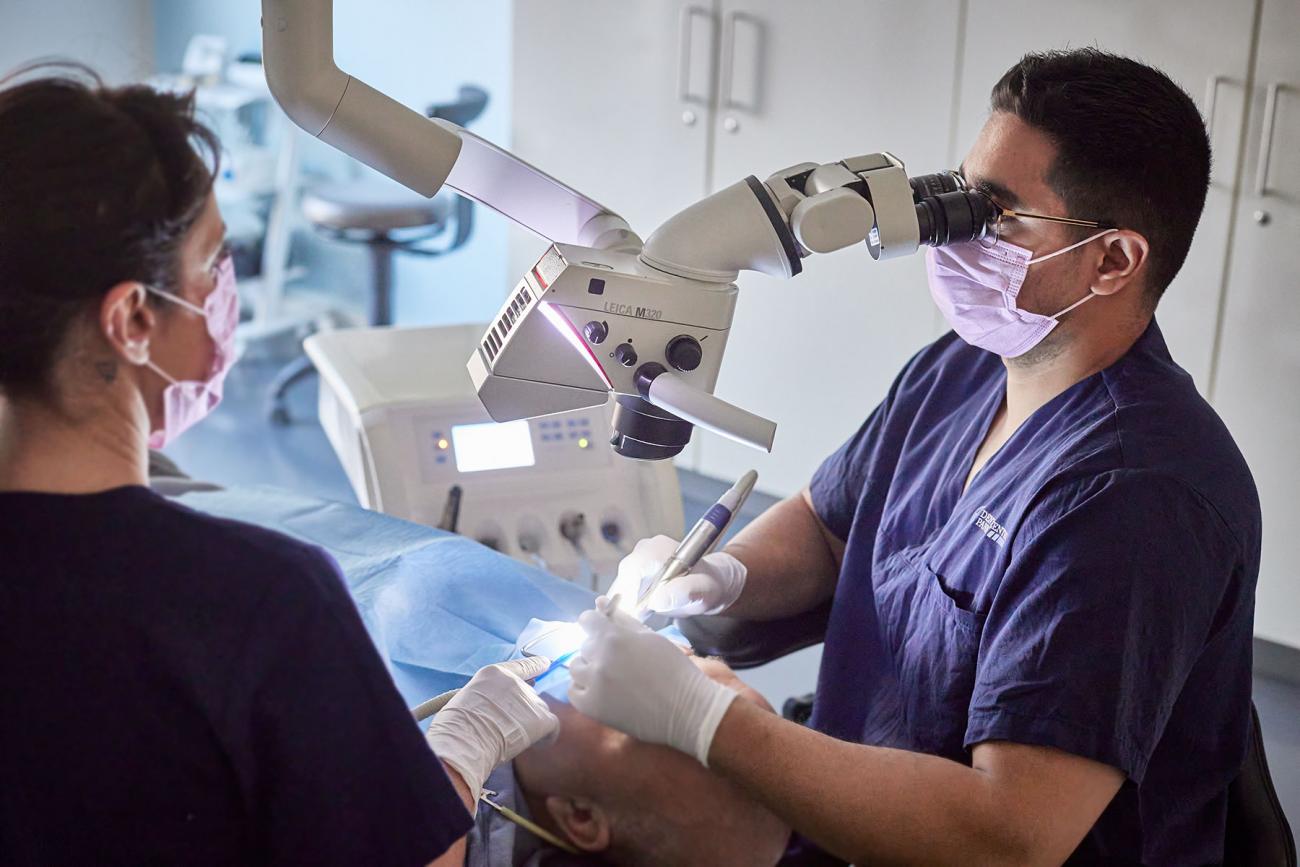
The field of endodontology has developed into an explicit specialty in recent years. Due to numerous new scientific findings in the therapeutic and anatomical fields, the success rate of root canal treatment has increased dramatically. Specialized dentists acquire the skills and knowledge to treat root canal-infected teeth safely, painlessly, and with long-term stability in postgraduate training programs, such as master's degrees or curricula. In particular, microscope-assisted endodontology is a central component of successful root canal treatment. Supplemented by mechanical preparation systems and instrumental length determination of the root canals, as well as specific irrigation protocols for disinfection, endodontists can perform this complex treatment with a long-term prognosis of well over 90%.
COMPLEX TREATMENTS
That is why our specialized teams in the field of endodontics are able to successfully treat even complex endodontic cases in many instances. These include, among others:
Complex root canal anatomy and additional root canals, especially in multi-rooted teeth (premolars and molars).
Revisions of teeth that have already undergone root canal treatment in cases of persistent discomfort or inflammation.
Removal of fractured instruments from the root canal system.
Covering of perforations caused during previous treatments or by resorption.
Removal of root posts for renewed endodontic treatment.
Treatment of open root apices, especially in young teeth or traumatic damage.
Acute trauma therapy for fractured, dislocated, or avulsed (completely lost) teeth after accidents.
Thanks to modern diagnostics, microscope-assisted treatment techniques, and structured therapy planning, stable and long-term results can be achieved even in these cases—with the clear goal of preserving the natural tooth.
External referrals should contact our senior endodontist directly.